
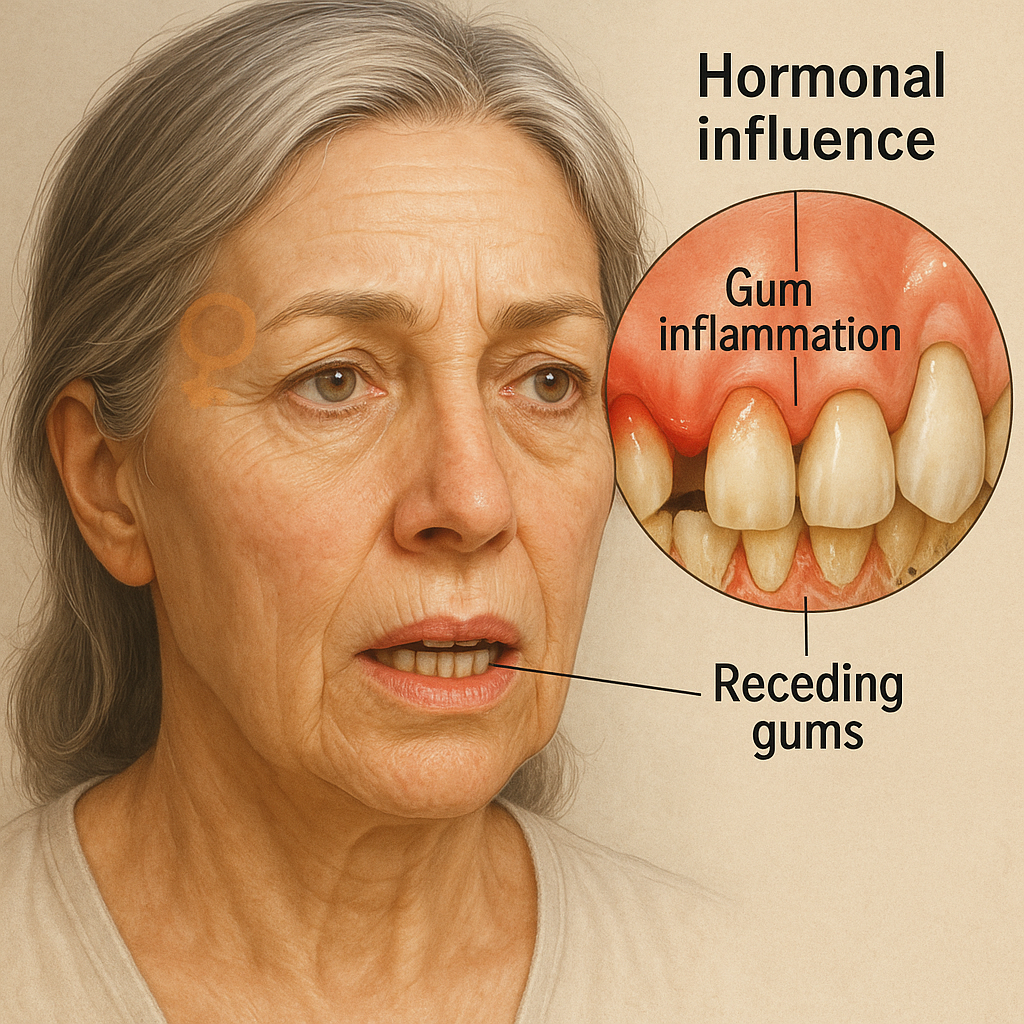
Hormonal Changes, Inflammation, and Oral Health Explained
🩺 Introduction:
Hormonal changes during menopause are known to affect bones, skin, and mood — but few women realise just how much menopause can impact oral and gum health. Bleeding gums, receding tissue, burning sensations in the mouth, or even increased plaque buildup may all be linked to a drop in oestrogen. In this article, Dr. Meizi Eliezer, a Swiss-trained periodontist, explains the evidence behind this connection and why midlife women must pay special attention to their periodontal care.
🎥 Watch the video clip: How Menopause Affects Your Gums – with Dr. Meizi
🧬 Hormones and the Mouth: What’s Really Going On?
The key hormonal player during menopause is oestrogen, which helps maintain connective tissues and supports healthy blood flow — including to the gums. When oestrogen drops, it can lead to: One study in Oral Health & Preventive Dentistry found that postmenopausal women were significantly more likely to show signs of gingival bleeding and periodontitis, even when controlling for oral hygiene habits (¹).
😬 What Is Burning Mouth Syndrome?
Some menopausal women report a burning, tingling, or scalded sensation on the tongue, lips, or palate — without any visible cause. This is known as Burning Mouth Syndrome (BMS). It’s thought to be caused by a combination of:
- Hormonal changes
- Neurological factors
📺 Dr. Meizi will explain this more in detail in an upcoming video — follow to stay updated.
👩⚕️ Periodontal Treatment During Menopause: What to Know
If you’re undergoing gum treatment, hormone changes may: At PerioHome, Dr. Meizi personalises every treatment plan to account for hormonal stages — including menopause and perimenopause — to optimise long-term outcomes.
🧾 Scientific References:
📢 Final Thoughts
Menopause is a natural part of life, but the changes it brings don’t have to include gum recession or discomfort. With the right knowledge and periodontal support, your mouth can stay as healthy and resilient as ever.